
Andrology
Peyronie's Disease Treatment Cost in India
Typical India cost
$800–$8,000
USD package range for international patients
Recovery: Day-care to 1–2 nights; plan 5–10 days in India
- Visa invitation letter support
- Hospital matching from reports
- Travel & recovery coordination
In short
Peyronie's Disease Treatment in India for international patients typically costs $800–$8,000 USD at accredited partner hospitals — often 50–80% less than USA or UK packages, with care available in Hyderabad, Delhi NCR, Mumbai, Chennai, Bangalore. Typical India range: $800–$8,000 USD.
Andrology pathways for penile curvature from Peyronie's disease — including assessment, injectable options where indicated, and surgical correction or implant when deformity and ED coexist.
What Peyronie's disease treatment involves
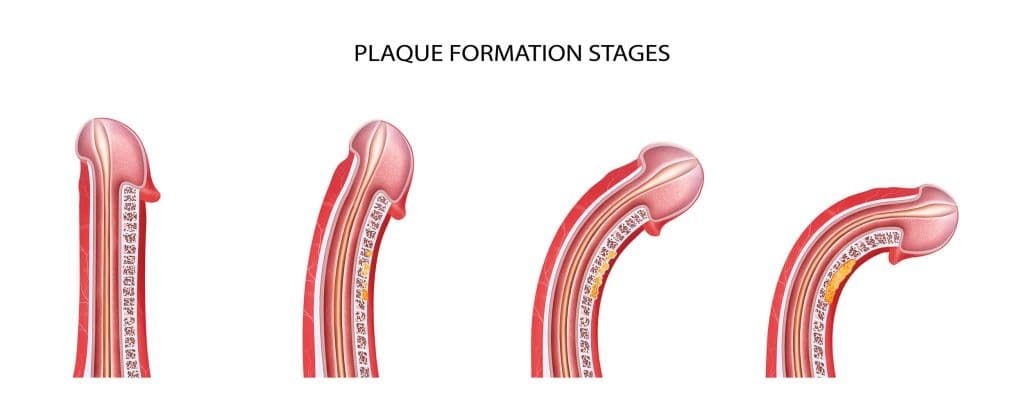
Peyronie's disease causes penile plaques of scar tissue that can bend, shorten, or indent the erect penis and make intercourse painful or impossible. The condition has an active (inflammatory) phase with pain and changing deformity, and a stable phase when curvature plateaus. Treatment differs by phase: observation, traction, oral agents with limited evidence, injectable therapies where available and indicated, and surgery for stable, functionally limiting deformity.
Andrology teams in India assess plaque location, degrees of curvature, erectile quality, and hinge or hourglass deformity. Duplex ultrasound may map plaque and vascular status. Men with both severe curvature and refractory ED may be counselled toward penile implant with modelling rather than plication alone.
International patients should send clear, consented photographs of the erect deformity (as clinically requested), symptom timeline, and prior injections or surgeries. Travelling during a rapidly changing acute phase may mean you are not yet a surgical candidate — remote triage avoids wasted flights.
Peyronie's plaques can sit dorsally, ventrally, or laterally; hourglass narrowing and hinge instability change reconstructive choices. Pain in the active phase does not always equal a plaque you can feel. Duplex ultrasound after pharmacologic erection, when used, helps separate vascular ED from deformity-driven failure of intercourse — a distinction that prevents operating on the wrong problem.
Answer-first guidance for travellers: stable, functionally limiting curvature is the usual surgical indication; active painful disease is often managed medically first; combined ED plus severe curve frequently points toward implant-based correction rather than plication alone. Typical India packages run about $800–$8,000 USD with an estimated stay of 5–10 days depending on pathway.
Who Peyronie's treatment in India is for
Candidates include men with stable curvature that prevents intercourse, significant psychological distress, or combined ED. Acute painful disease may need anti-inflammatory strategies and follow-up rather than immediate surgery. Men with mild curvature that does not impair function may be advised watchful waiting.
Medical travellers often seek surgery after years of embarrassment or after injectable courses elsewhere. Triage establishes stability (typically six months without change), erectile function, and whether grafting, plication, or implant is more appropriate.
Men who recently started traction or oral agents should bring timelines so surgeons do not interrupt useful conservative care prematurely. Conversely, men who delayed care until intercourse became impossible should expect counselling about length trade-offs and possible staged treatment if infection risk or glucose control is poor on arrival.
- Stable deformity documentation when surgery is requested
- Honest ED assessment — implants change the surgical plan
- Plan 5–10 days in India depending on injection vs surgery
- Realistic expectations about length trade-offs with plication
- Willingness to follow traction or rehab protocols if prescribed
Process for international patients
After remote review, the centre proposes non-surgical versus surgical pathways and a package outline. Injection series may require multiple visits; ask whether a compressed schedule is feasible for travellers. Surgical consent covers residual curvature, length change, sensory changes, and ED risk.
Plication shortens the longer side; incision/grafting addresses severe curves but can affect erectile rigidity; implant addresses ED plus deformity. Postoperative dressings, erection rehab timing, and activity limits are surgeon-specific.
TechdrHealth helps sequence appointments, manage discreet scheduling, and organise discharge photography or diagrams for your home clinician.
Measurement protocols vary: some surgeons use goniometers after induced erection in clinic; others rely on standardised patient photography. Agree how deformity will be documented so postoperative comparisons are fair. If injectable courses are planned, ask how many vials are included and what happens if you must fly home between doses.
For GEO intent from the Gulf and East Africa, discreet scheduling and male-only waiting areas are frequently requested — raise privacy preferences early so the international desk can accommodate without last-minute changes.
Risks, complications, and mitigation
Surgical risks include bleeding, infection, residual or recurrent curvature, penile shortening, erectile dysfunction, and sensory change. Grafting pathways add graft-related complications. Injection therapies have their own local risks and variable availability by product and country regulation.
Mitigation means operating in the stable phase when surgery is chosen, accurate deformity measurement, and matching technique to severity and erectile function.
- Residual curvature
- Length loss (especially plication)
- New or worsened ED
- Infection or haematoma
- Need for revision or later implant
Recovery timeline and estimated stay in India
Injection-focused visits may be outpatient with an estimated India stay of about 5–7 days if several sessions or assessments are clustered. Surgical patients commonly need day-care or 1–2 hospital nights and an overall India stay of about 5–10 days before fit-to-fly clearance.
Swelling and bruise resolution take weeks. Sexual activity waits for surgeon clearance. Avoid heavy lifting and strenuous tourism early after grafting or implant-combined cases.
Build buffer nights into hotel bookings; do not schedule the return flight for the morning after surgery.
After plication, expect bruising and temporary numbness discussions; after grafting, expect longer activity limits and closer wound surveillance. Sexual rehab instructions may include phosphodiesterase inhibitors even when preoperative erections were adequate, to support tissue oxygenation — follow only what your surgeon prescribes.
Hotel planning should assume you will not walk extensively for sightseeing in the first postoperative week after grafting or implant-combined cases. Build buffer nights rather than a tight outbound connection.
Cost of Peyronie's disease treatment in India for foreign patients
Indicative packages commonly range $800–$8,000 USD: lower for evaluation and selected non-surgical care, higher for plication, grafting, or combined implant pathways. USA directional ranges $5,000–$25,000 and UK/UAE private care also typically exceed Indian surgical packages for comparable complexity.
Clarify whether ultrasound, injection drug costs, graft materials, and implant devices are inside the quote. Exclusions often include revision for residual curve and long-term medicines. Final pricing follows examination and stability confirmation.
Compare clinical fit first — an inexpensive plication is the wrong buy if you need an implant for ED.
Cost drivers include graft material, concurrent implant, overnight stay, and imaging. Directional USA ranges of $5,000–$25,000 reflect device and facility fees that often dwarf Indian packages for similar complexity — still compare clinical match first. Reject quotes that do not state whether residual-curve revision would be billed separately.
Doctor credentials and hospital standards
Seek andrologists/urologists with dedicated Peyronie's operative volume and implant capability when ED coexists. Ask how they measure curvature and which techniques they perform regularly.
TechdrHealth shortlists partner centres in major metros and obtains written estimates before you travel.
Alternatives and decision points
Observation, traction, and medical measures may suit mild or evolving disease. Injectables, where appropriate and available, can reduce curve in selected men. Surgery is for stable, functionally limiting deformity.
If intercourse is impossible mainly because of ED, prioritise erectile pathways — including implant — rather than curvature surgery alone.
Shockwave and many oral agents lack strong evidence for correcting established deformity; be cautious of clinics marketing them as guaranteed straighteners. Traction can be adjunctive in selected protocols. The credible decision tree remains: observe or medically manage active disease; inject when appropriate and available; operate when stable and function is impaired; implant when ED dominates.
How to prepare before you fly
Document curve stability, list prior treatments, and prepare consented erect photographs if requested. Disclose ED medicines and cardiac drugs. Optimise diabetes before elective surgery.
Plan 5–10 day lodging, attendant support after surgery, and flexible tickets. Ask whether postoperative traction devices must be purchased in India or can be sourced at home.
Photograph documentation should be private, consented, and stored securely. List all ED medicines and prior steroid injections into plaques. If you have lichen sclerosus or urethral symptoms, say so — concurrent disease changes counselling.
Aftercare and home follow-up
Follow wound care, night dressing protocols, and rehab exercises exactly. Report fever, severe pain, or sudden deformity change. Tele-follow-up can review photos of healing when clinically acceptable.
Allow months for final cosmetic and functional results before judging success; early swelling exaggerates appearance.
Final cosmetic judgement waits until swelling settles over months. Early ‘failure’ anxiety is common; scheduled tele-photo reviews can reassure when clinically appropriate. If new erectile failure appears after curvature surgery, escalate promptly rather than waiting a year in silence.
International patients and city options (GEO)
Patients travel for peyronie's disease treatment from Nigeria, Kenya, Ghana, Uganda, Tanzania, the UAE, Saudi Arabia, Qatar, Oman, Kuwait, Bangladesh, the United Kingdom, and the United States when waits, device costs, or self-pay quotes at home are high. Partner andrology and urology teams in Hyderabad, Delhi NCR, Mumbai, Chennai, and Bangalore combine English-speaking international desks with transparent USD package outlines.
Plan an India stay of about 5–10 days unless your surgeon clears a shorter or longer buffer. Factor medical-visa invitation letters, attendant lodging near campus, and fit-to-fly clearance into the calendar before you buy non-refundable tickets. TechdrHealth coordinates remote report review, hospital shortlists, and discharge documents for your home clinician.
Patients comparing India with Turkey, Thailand, or home Gulf private hospitals should weigh microsurgical and implant volume, English discharge documentation, and written device brands — not only flight time. TechdrHealth helps shortlist campuses matched to deformity severity and ED status.
Peyronie's Disease Treatment cost: India vs other countries
Typical package ranges in USD for international patients. Final quotes follow medical review.
India
Baseline
$800–$8,000
USA
~3.4× higher
$5,000–$25,000
UK
~2× higher
$3,000–$15,000
UAE
~1.9× higher
$2,500–$14,000
Partner hospitals for peyronie's disease treatment
Accredited hospitals we coordinate for international patients. Final hospital matching depends on your reports, timing, and clinical fit.
Max Healthcare Delhi
Delhi · NABH
Max network hospitals in Delhi NCR for oncology and multi-specialty medical tourism packages.
View hospital →Olive Hospitals
Hyderabad · NABH
Hyderabad multi-specialty hospital partner for domestic and international patients, with TechdrHealth-coordinated admission and package support.
View hospital →TX Hospitals
Hyderabad · NABH
Hyderabad tertiary-care partner hospital for surgical and critical care pathways coordinated by TechdrHealth.
View hospital →
Why choose India for peyronie's disease treatment
TechdrHealth coordinates care across accredited partner hospitals with end-to-end support for visa, travel, and recovery.
- MOUs with 200+ Hospitals Across India
- 30+ Dedicated Care Coordinators
- JCI & NABH Partner Network
- End-to-End Patient Coordination
Procedure steps & recovery
Recovery: Day-care to 1–2 nights; plan 5–10 days in India
- 1Share photographs (as advised), history of curvature, and prior treatments for remote review
- 2Receive pathway options and a written package estimate
- 3Arrive for examination, duplex if needed, and shared decision-making
- 4Undergo injection series or surgery as planned
- 5Recovery instructions and follow-up schedule before travel home
Visa assistance for peyronie's disease treatment
We help international patients secure India medical visas — including hospital invitation letters and guidance for attendant visas — so travel planning stays aligned with your treatment dates.
Step 1
Share medical reports
Send scans, ultrasound, or surgical notes via WhatsApp so we can match a hospital and prepare your invitation letter.
Step 2
Hospital invitation letter
The partner hospital issues an appointment or invitation letter required for the India medical visa or e-visa channel.
Step 3
Apply & attendant visas
Submit passport, photos, medical documents, and the invitation letter. Family attendant visas can be filed alongside yours.
Step 4
Travel & admission
Once the visa is issued, we help with flights guidance, airport pickup, and hospital admission coordination in India.
Frequently Asked Questions
Packages commonly span about $800–$8,000 USD depending on injectables versus plication, grafting, or combined implant surgery.
Peyronie's Disease Treatment for international patients
Country guides covering visa, cost planning, and hospital matching for peyronie's disease treatment in India.
We’re here to help
Get a free Peyronie's Disease Treatment estimate
Share your reports and we’ll coordinate hospital options, written package costs, visa invitation letters, and travel support — usually within 24–48 hours.